
Optimizing news feeds purely for viral engagement systematically starves public interest reporting and dismantles democratic trust
Arjun refreshes his inbox. The decision from the streaming studio is finally here.
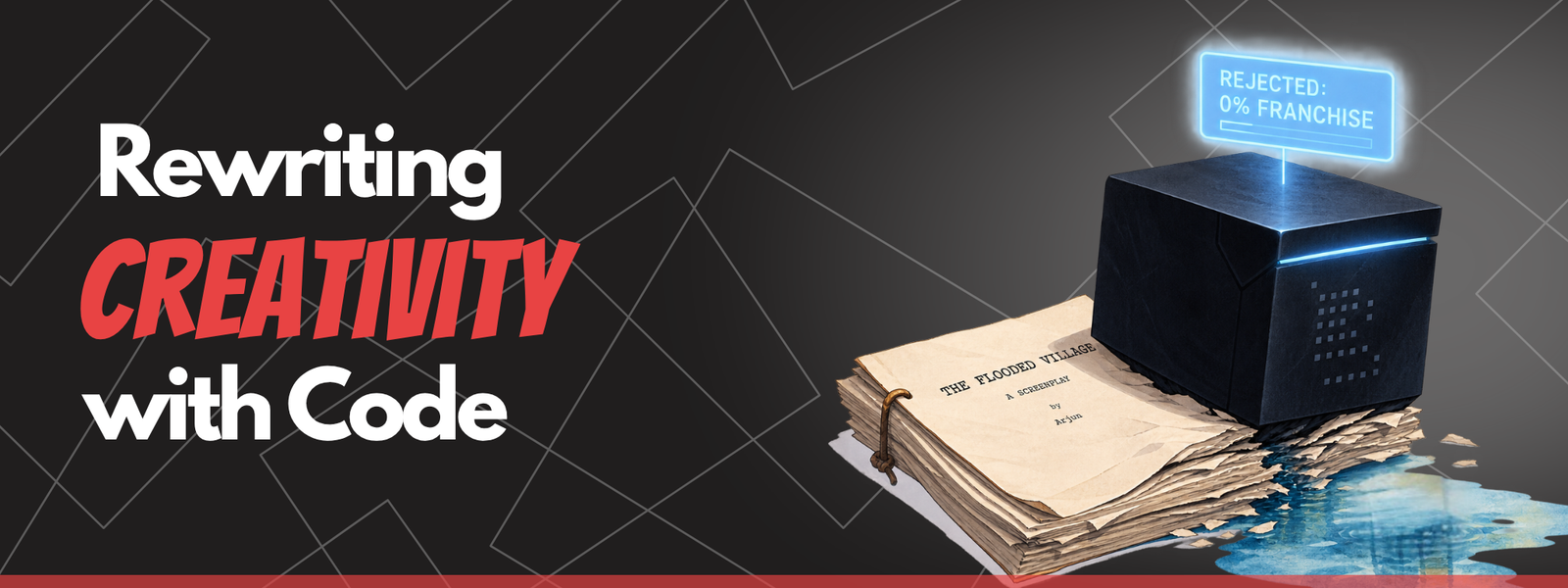
For nearly three years, he poured his life into an original, deeply human screenplay. The story was about an aging schoolteacher who becomes the anchor of a village during a flood.
A respected director had praised it. Experienced actors showed interest. An independent producer had even personally recommended it to a major streaming studio.
He opens the message and stares in disbelief.
After a week of waiting, the studio rejected the film outright. They provided no detailed feedback or discussion.
His years of work were reduced to a rigid numerical prediction. The system cited low projected audience engagement, limited franchise potential, and a below-threshold commercial prediction.
When Arjun reaches out for clarity, nobody can explain the reasoning behind the decision.
The studio had recently deployed an AI Script Intelligence Platform. This tool analyzed thousands of variables to predict commercial success. Arjun is left disappointed by the rejection, and also by the complete lack of transparency.
The Optimization Trap
Eighteen months later, a smaller production house took a chance and made the film. Titled ‘A Village Stands Tall’, the movie exceeded all expectations. It won multiple awards and touched millions of hearts.
The ultimate irony occurred shortly after. The exact same streaming studio that allowed an algorithm to reject the script was now in talks to acquire its blockbuster rights.
This incident raised difficult questions across the entertainment industry. Are we selecting the safest stories instead of the best stories? Are we rewarding familiarity over originality?
To the studio leadership, the intelligence platform felt like a perfect safety net. But the algorithm learned exclusively from past viewing behavior and historical genre performance.
A predictive model cannot imagine something new. It can only hold a mirror up to the past.
By unintentionally favoring past success, the business systematically locked out a generation of diverse voices. They completely stalled their own innovation. You cannot discover a cultural breakthrough by asking a machine to constantly recycle historical box office receipts.
Breaking the Pattern
Before Deployment
- Diversify the Data: Use diverse, representative datasets that actively include successful non-mainstream films.
- Proactive Testing: Test the system for bias against new genres, first-time writers, and unconventional storytelling.
- Collaborative Design: Involve creatives in the model design, not just data teams. Build models that value diversity, originality, and cultural relevance.
During Deployment
- Demand Transparency: Provide clear, human-readable explanations for each evaluation. Show confidence scores and the key factors influencing the decision.
- Arm the Frontline: Ensure human review with creative experts. AI should inform the process, not decide it.
- Establish Recourse: Allow creators the ability to appeal automated decisions and provide additional context.
After Deployment
- Audit the Misses: Continuously monitor outcomes by tracking actual versus predicted success.
- Force the Pivot: Audit for bias and unintended exclusion. Update models with new data and evolving audience preferences.
- Measure Impact: Track the diversity of greenlit projects to ensure the system supports new voices.
The Uncomfortable Truth
The ultimate objective of the film industry is to challenge human imagination and reflect diverse cultural realities.
When algorithms prioritize commercial optimization over creative innovation, we risk a world with fewer original stories. We risk fewer new voices and a poorer cultural future.
The machine is not to blame for the initially rejected screenplay. The true failure lies in our dangerous assumption that human creativity can be safely predicted by a mathematical formula.
Let’s build a film and media ecosystem where every good story has a fair chance to be seen, heard, and celebrated.
This blog is part of a series of real-world missing “Responsible AI” stories. We believe understanding what was missing is the first step to building it right.