A routine emergency room visit turned critical after a hospital triage system prioritized operational speed over basic medical intuition.
The Hidden Cost of Automated Triage
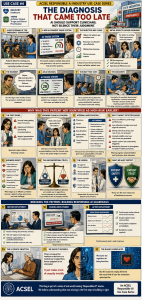
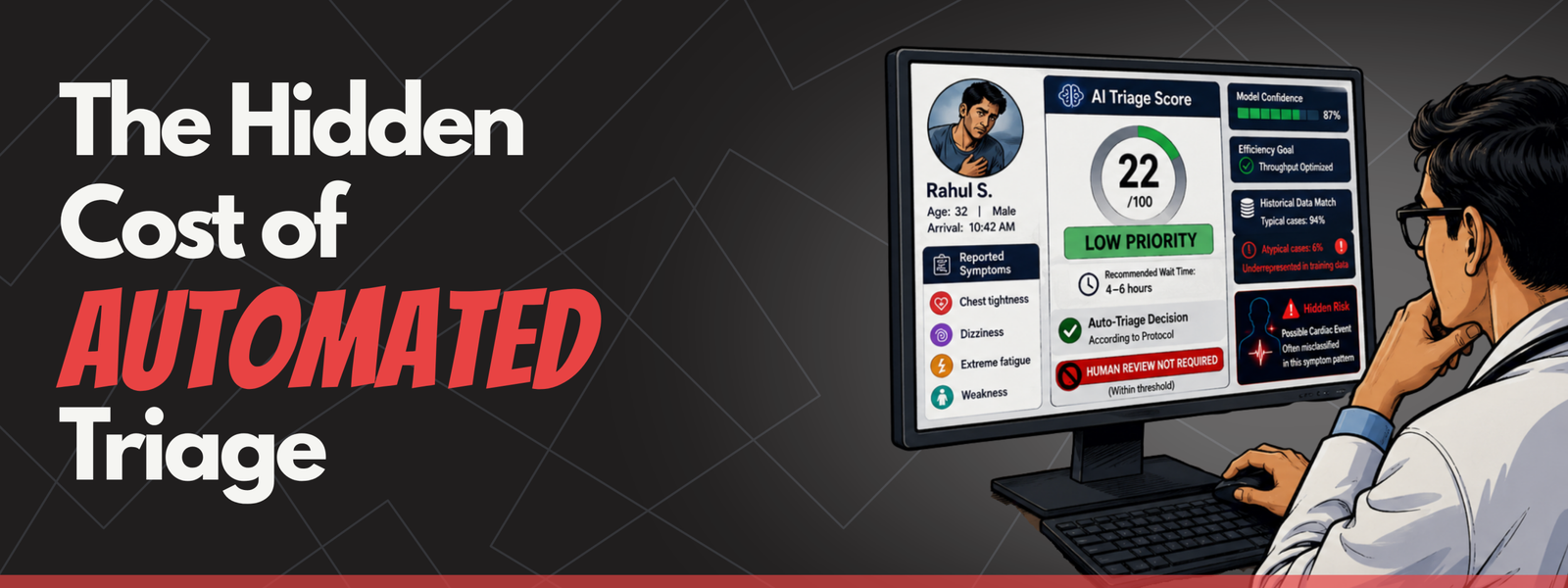
Rahul clutches his chest. He struggles for a full breath.
The emergency room buzzes around him as extreme fatigue pulls him downward. He explains his dizziness and weakness to a nurse.
The nurse types the symptoms into a new artificial intelligence triage platform.
The algorithm calculates. Low priority.
The nurse looks at the screen. She is bound by strict protocol. She asks Rahul to wait.
Hours bleed together. Other people go in first.
Rahul silently worsens. When a doctor finally examines him, a severe cardiac event is already destroying tissue.
Family members ask the staff how they missed it. The nurse stares back helplessly.
“That is the score generated by the system”.
The Illusion of Objectivity
Healthcare providers are currently battling unprecedented patient volumes. Hospital leadership implemented this automated triage system to modernize care and allocate scarce resources efficiently.
Initially, the internal metrics told a story of absolute success. Emergency department flow improved and operational efficiency climbed. The platform processed thousands of patients with apparent perfection.
Globally, organizations are now making urgent changes as similar incidents surface worldwide.
But here is the uncomfortable truth: the artificial intelligence did not malfunction when it dismissed his condition. It worked exactly as designed according to the biased historical data it was given.
The system was trained using historical data that severely underrepresented unusual symptom combinations. The hospital was obsessed with measuring throughput and wait times. They practically ignored edge cases and the resulting human collateral damage.
‘An algorithm that optimizes for speed while ignoring complex medical realities does not innovate. It simply scales our organizational blind spots and weaponizes them against the vulnerable.’
Breaking the Pattern
To stop efficiency initiatives from becoming patient safety liabilities, healthcare providers must embed structural accountability across the algorithm lifecycle:
- Before Deployment: You cannot train a model on limited data and expect universal accuracy. Hospitals must execute a strict training data diversity review before a model goes live. If you cannot prove explainability in a clinical setting, do not unleash it on your patients.
- During Deployment: Speed is useless if it creates fatal delays for complex cases. Administrators must establish clear clinical override protocols. Furthermore, strict human review thresholds must be hardwired for atypical presentations. A machine should never have the final uncontested authority to deny immediate medical care.
- After Deployment: A deployed model requires relentless scrutiny. Organizations must launch continuous adverse event reviews and systematically track patient outcomes. If clinical intuition consistently clashes with machine scores, it must immediately trigger a mandatory model recalibration.
The Uncomfortable Truth
The ultimate objective of healthcare is to provide safe and effective treatment during moments of vulnerability. Operational efficiency alone cannot be the primary measure of success.
Artificial intelligence scales human assumptions at terrifying speeds. When we prioritize metrics over medical intuition, we make a profound lack of empathy completely invisible.
The machine did not fail Rahul at the emergency department. The historical bias we gave it did.
This blog is part of a series of real world missing “Responsible AI” stories. We believe understanding what was missing is the first step to building it right.