
Optimizing news feeds purely for viral engagement systematically starves public interest reporting and dismantles democratic trust
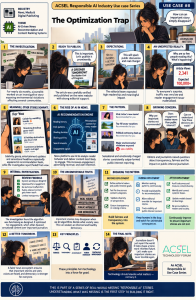
Maya hits refresh. The traffic meter barely registers a pulse.
She just published a massive, six month investigation into environmental violations poisoning local drinking water. Editors promised this piece would spark immediate public outrage.
Instead, the story is drowning in a digital void. As she watches the live analytics, a piece of recycled celebrity gossip completely takes over the homepage.
Frustrated, she walks over to her managing editor, expecting him to manually pin her investigation to the top. He just shakes his head, bound by the rigid rules of their new publishing platform.
“The system only cares about click velocity and reading time,” he admits quietly.
He cannot feature her work because the algorithm automatically prioritizes whatever generates the fastest emotional reaction. Maya spent half a year verifying facts, and a piece of code erased her work in seconds to make room for cheap entertainment.
The Optimization Trap
Upstairs, the publishing executives were looking at a completely different reality. The new recommendation engine was keeping users on the site longer and driving advertising revenue higher than ever before.
The board saw a highly profitable quarter built on unprecedented reader retention.
But the system did not malfunction when it buried the investigation. It executed its exact marching orders: prioritize immediate attention over public importance.
The algorithm was ruthlessly optimized to maximize repeat visits and emotional engagement. It was never programmed to understand the difference between cheap sensationalism and vital public interest reporting.
The business chose to scale attention metrics, completely ignoring how that choice would systematically starve investigative journalism of an audience.
When a publisher optimizes solely for viral engagement, it turns an algorithmic gatekeeper into the ultimate censor, quietly burying critical truths beneath a mountain of digital noise.
Breaking the Pattern
Before Deployment
- Interrogate the Impact: Execute a strict editorial diversity assessment before launching any recommendation engine. If the training data heavily rewards sensationalism, adjust the weights to protect civic reporting.
- Define Journalistic Value: Program the model to recognize deep investigative work, rather than treating all content as equal engagement fodder.
During Deployment
- Arm the Frontline: Give human editors a hardwired override switch to bypass the algorithm. When a machine hides critical civic information, human editorial judgment must instantly prevail.
- Demystify the Ranking: Provide editors with clear visibility into the specific behavioral signals actively pushing content up or down the feed.
After Deployment
- Audit for Diversity: Measure public interest reach and information diversity just as ruthlessly as you track advertising revenue.
- Trigger Rapid Recalibration: Force an immediate model adjustment the moment vital reporting is consistently choked out by sensational clickbait.
The Uncomfortable Truth
The ultimate objective of the media industry is to inform the public and protect democratic discourse. Digital scale and advertising revenue alone can never be the primary metrics of success.
When we surrender the distribution of news to automated engagement loops, we quietly dismantle public trust.
The code is not responsible for silencing this vital reporting. The real failure happens the exact moment we allow engagement metrics to replace human conscience.
This blog is part of a series of real world missing “Responsible AI” stories. We believe understanding what was missing is the first step to building it right.